
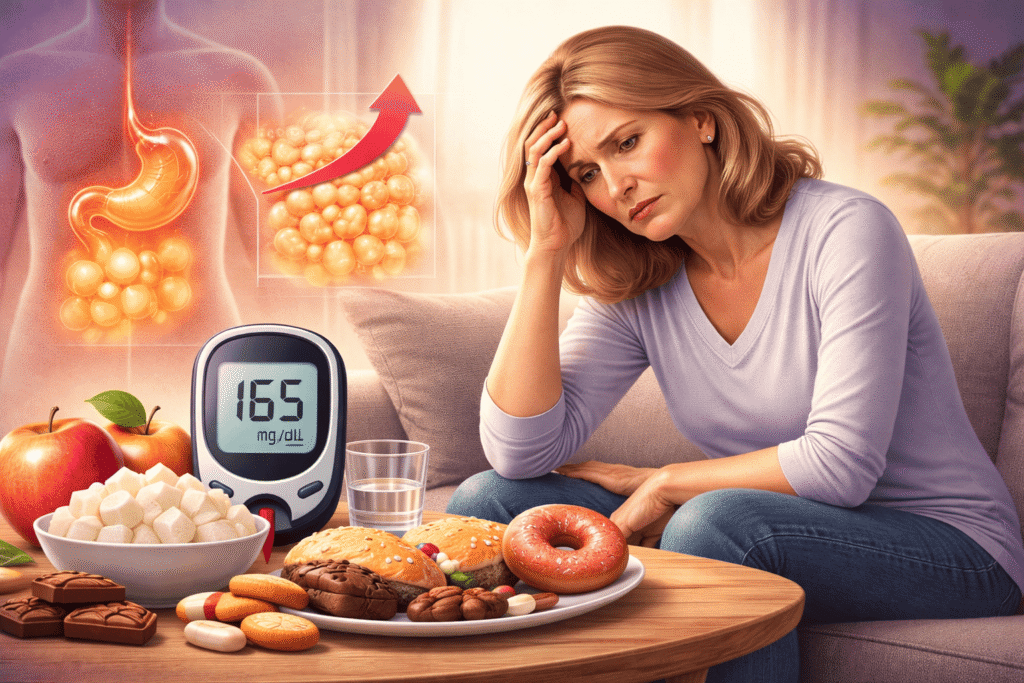
Many women entering menopause notice unexpected changes in their energy levels, appetite, and weight. While these shifts are often attributed solely to hormonal fluctuations, another important factor may be involved: blood sugar regulation.
The symptoms of high blood sugar can sometimes appear gradually and may be mistaken for typical menopause symptoms. Fatigue, brain fog, increased hunger, abdominal weight gain, and sugar cravings are frequently reported during midlife, yet these symptoms can also signal changes in how the body manages glucose.
During menopause, estrogen levels decline and the body’s metabolic systems adapt to a new hormonal environment. These changes may influence insulin sensitivity, appetite regulation, and fat distribution. As a result, some women become more prone to blood sugar spikes and insulin resistance, particularly when lifestyle factors such as stress, sleep disruption, and dietary habits are also present.
Understanding the early signs of blood sugar imbalance can help women take proactive steps to support metabolic health during menopause and prevent long-term complications.
Why Blood Sugar Changes During Menopause
Hormones play a powerful role in metabolism, and estrogen is closely involved in how the body processes glucose.
Estrogen helps regulate insulin sensitivity in muscle and liver cells. When estrogen levels decline during menopause, the body may become less efficient at transporting glucose into cells for energy. This can lead to higher circulating blood sugar levels and greater fluctuations after meals.
Several physiological changes contribute to this process.
Reduced insulin sensitivity
Cells may respond less effectively to insulin, requiring higher insulin levels to manage glucose.
Changes in body fat distribution
Many women develop more abdominal fat during menopause, which is strongly associated with insulin resistance.
Sleep disruption and hot flashes
Interrupted sleep can affect hormones that regulate appetite and blood sugar.
Increased stress hormones
Higher cortisol levels can increase glucose production in the liver.
According to the Centers for Disease Control and Prevention, long-term high blood sugar levels are associated with metabolic conditions such as prediabetes and type 2 diabetes.
For this reason, recognizing the symptoms of high blood sugar early can be an important step in protecting long-term health.
Common Symptoms of High Blood Sugar in Menopause
High blood sugar does not always cause obvious symptoms immediately. In many cases, subtle metabolic changes appear first.
Women in menopause frequently report experiencing:
- persistent fatigue
- sugar cravings
- increased thirst
- frequent urination
- abdominal weight gain
- difficulty concentrating
- irritability or mood changes
These symptoms may occur because glucose is not being efficiently used by cells for energy. When glucose remains elevated in the bloodstream, the body struggles to maintain stable energy levels.
Over time, persistent blood sugar instability may contribute to chronic inflammation, weight gain, and metabolic dysfunction.
Can Stress Raise Blood Sugar?
One of the most overlooked contributors to blood sugar imbalance during menopause is chronic stress.
When the body experiences stress, it activates the release of cortisol and adrenaline. These hormones prepare the body for a “fight or flight” response by increasing glucose production in the liver. This process ensures that muscles have enough energy available to respond to perceived danger.
However, in modern life, stress often occurs without physical activity. As a result, the glucose released into the bloodstream is not always used for energy, which can contribute to higher blood sugar levels.
For women in menopause, this effect may be amplified. Hormonal changes can make the body more sensitive to cortisol, meaning that stress may have a stronger impact on metabolism than it did earlier in life.
Chronic stress can therefore contribute to:
- higher fasting glucose levels
- stronger sugar cravings
- increased abdominal fat storage
- worsening insulin resistance
Managing stress through sleep, relaxation practices, physical activity, and balanced nutrition can significantly improve metabolic health.
What Are 5 Signs Your Blood Sugar Is Too High?
Recognizing the early warning signs of blood sugar imbalance can help prevent long-term metabolic problems.
1. Persistent fatigue
When cells cannot efficiently absorb glucose, energy production becomes less stable. This often leads to feelings of fatigue, particularly after meals.
2. Increased thirst and frequent urination
High blood sugar levels cause the kidneys to work harder to remove excess glucose from the bloodstream. This process increases urination and can trigger persistent thirst.
3. Strong sugar cravings
Blood sugar spikes followed by rapid drops can stimulate cravings for sweets or refined carbohydrates.
4. Brain fog and difficulty concentrating
Glucose fluctuations can influence brain function, leading to reduced focus and mental clarity.
5. Increased abdominal fat
High insulin levels promote fat storage around the abdomen, a pattern commonly observed during menopause.
Abdominal fat accumulation is strongly linked to insulin resistance and metabolic risk. A deeper explanation of this relationship can be found here: Visceral Fat and Insulin Resistance Explained
Understanding what are 5 signs your blood sugar is too high allows women to identify metabolic imbalances early and adopt strategies that support long-term health.
How to Stop Insulin Resistance in Menopause?
Insulin resistance is one of the most significant metabolic changes that can occur during menopause. Fortunately, it is often reversible with targeted lifestyle adjustments.
Stopping insulin resistance requires a combination of metabolic strategies that improve how cells respond to insulin.
Improve meal composition
Meals that contain adequate protein, fiber, and healthy fats slow carbohydrate absorption and help stabilize blood sugar levels. Highly processed carbohydrates tend to produce rapid glucose spikes and should be minimized.
Increase muscle activity
Muscle tissue is one of the primary sites where glucose is used for energy. Strength training and regular movement help increase insulin sensitivity.
Improve sleep quality
Sleep deprivation has been shown to impair glucose metabolism and increase insulin resistance.
Manage inflammation
Chronic inflammation is closely associated with metabolic dysfunction. Anti-inflammatory foods such as vegetables, healthy fats, and omega-3 sources may support metabolic health.
A deeper guide explaining How to stop insulin resistance in menopause can be found here: Insulin Resistance in Women Over 40: 7 Early Signs You Shouldn’t Ignore.
Taking proactive steps to improve insulin sensitivity can significantly reduce the risk of metabolic diseases later in life.
7 Natural Menopause Treatments That Really Work
Many women search for natural ways to improve metabolic health during menopause. While lifestyle changes remain the foundation, certain natural strategies may support hormone balance and blood sugar regulation.
Below are 7 natural menopause treatments that really work when combined with a healthy lifestyle.
1. Balanced nutrition
Whole foods rich in fiber, protein, and healthy fats support stable glucose levels and reduce insulin spikes.
2. Strength training
Resistance exercise helps increase muscle mass, improving glucose uptake and metabolic flexibility.
3. Daily walking
Walking after meals has been shown to significantly improve blood sugar regulation.
4. Stress reduction
Mindfulness, breathing exercises, and adequate rest can help regulate cortisol levels.
5. Sleep optimization
Quality sleep supports hormonal balance and improves insulin sensitivity.
6. Nutrient support
Certain nutrients such as magnesium, chromium, and cinnamon extract have been studied for their role in glucose metabolism.
7. Natural supplements
Some women explore natural supplements designed to support healthy blood sugar levels. These products often contain plant-based ingredients associated with metabolic health.
One example is Sugar Defender, a supplement that combines several botanical ingredients aimed at supporting glucose regulation and metabolic balance.
A full ingredient breakdown and research overview can be found here: Sugar Defender Review: Does It Really Support Blood Sugar After 40?
While supplements can provide supportive benefits, they work best when combined with healthy nutrition, regular movement, and stress management.
Lifestyle Habits That Support Blood Sugar Balance
Preventing high blood sugar during menopause often depends on consistent daily habits.
Women who maintain stable metabolic health often prioritize:
- protein-rich meals
- consistent meal timing
- regular physical activity
- stress management
- adequate sleep
These habits help regulate insulin levels and reduce the likelihood of large glucose fluctuations.
Even small improvements, practiced consistently, can create significant long-term benefits for metabolic health.
Why Early Awareness Matters
High blood sugar can develop gradually over time. Many women remain unaware of metabolic changes until symptoms become more noticeable.
By recognizing the symptoms of high blood sugar, women can identify early metabolic warning signs and implement supportive strategies before more serious complications develop.
Midlife is not simply a period of hormonal transition—it can also be a powerful opportunity to strengthen metabolic health and build habits that support long-term vitality.
FAQ
What are the symptoms of high blood sugar during menopause?
Common symptoms include fatigue, increased thirst, frequent urination, brain fog, sugar cravings, and abdominal weight gain. These signs may indicate that the body is struggling to regulate glucose levels.
Can stress raise blood sugar?
Yes. Stress triggers the release of cortisol and adrenaline, hormones that increase glucose production in the liver. Chronic stress can therefore contribute to elevated blood sugar levels.
Why does menopause affect blood sugar?
Declining estrogen levels influence insulin sensitivity and fat distribution. These hormonal changes may increase the likelihood of insulin resistance and blood sugar fluctuations.
How can insulin resistance be reduced during menopause?
Lifestyle strategies such as balanced nutrition, regular physical activity, improved sleep, and stress management can significantly improve insulin sensitivity.
Are there natural supplements that support blood sugar balance?
Some supplements contain ingredients associated with glucose metabolism, including cinnamon extract, chromium, and plant-based compounds. Products like Sugar Defender combine several ingredients designed to support metabolic health.
Can blood sugar problems be prevented during menopause?
Yes. Maintaining a balanced diet, staying physically active, managing stress, and supporting metabolic health can significantly reduce the risk of developing insulin resistance or type 2 diabetes during menopause.
Final Thoughts
The symptoms of high blood sugar during menopause can sometimes be subtle and easily mistaken for typical hormonal changes. However, recognizing these signs early can make a significant difference in long-term health.
By understanding how hormones influence metabolism and adopting supportive lifestyle strategies, women can maintain stable blood sugar levels and protect metabolic health throughout midlife and beyond.
Menopause does not have to mean declining metabolic health. With the right awareness and habits, it can become an opportunity to build stronger, more resilient health for the years ahead.
Internal Hub: Blood Sugar and Menopause: A Practical Guide for Women 40+.