
Hormones, muscle loss, blood sugar shifts, stress, and sleep changes can all make midlife weight gain feel confusing—even when your diet has not changed much.
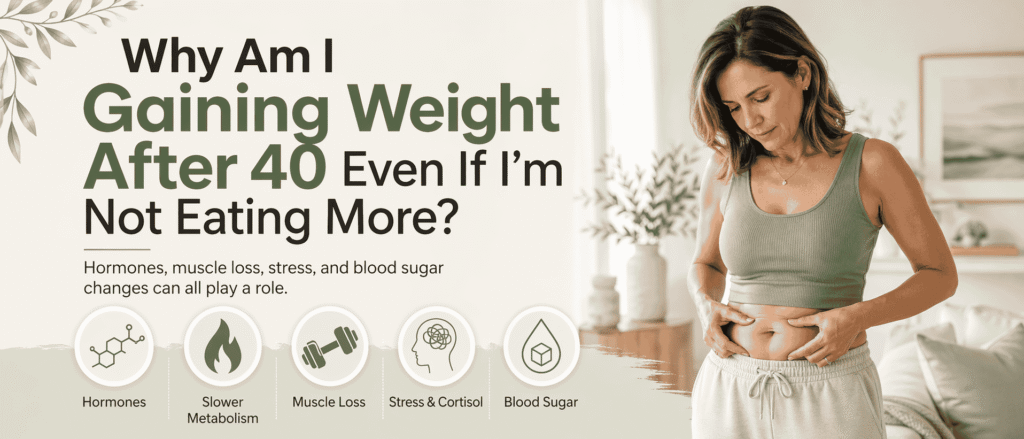
If you feel like your body changed before your habits did, you are not imagining it. Weight gain after 40 is often driven by more than calories alone. Muscle mass gradually declines, hormones begin to shift, insulin sensitivity may worsen, stress can hit harder, and sleep often becomes less restorative. The result is a body that may store fat more easily—especially around the waist—even if you are not obviously eating more than before.
This article explains what is really happening, why it often shows up around the belly, and what helps in a practical, sustainable way.
Quick Takeaways
👉 Weight gain after 40 is not always about eating more. Your body may simply be using energy differently than it used to.
👉 Loss of muscle, changing estrogen levels, insulin resistance, stress, and poor sleep can all make fat gain more likely.
👉 A common midlife complaint—belly fat without eating more—usually has a metabolic explanation, not a willpower explanation.
👉 The most effective response is not extreme dieting. It is better blood sugar support, more muscle-friendly habits, lower stress, and more consistency.
Why Midlife Weight Gain Feels So Confusing
One of the hardest parts of weight gain after 40 is that it often does not follow the old rules. Many women say the same thing: “I am eating about the same, I am not doing anything dramatic, and yet my body looks and feels different.” That disconnect is what makes the experience so frustrating. It feels unfair because the visible result shows up before the real cause becomes obvious.
The most important thing to understand is that body weight is not controlled by calories alone. It is shaped by how your body responds to those calories. That response can change over time. A meal pattern that used to feel neutral may now create a bigger blood sugar rise. A lifestyle that once maintained your shape may now lead to more fat storage simply because your body composition, hormones, and recovery are different.
Mayo Clinic explains that menopause-related hormonal changes, aging, lifestyle patterns, and genetics can all contribute to midlife weight gain, especially around the abdomen.
That is why weight gain after 40 can happen even when your plate looks familiar. The body changed first. The visible weight gain came after.
Muscle Loss Quietly Changes the Equation
A major reason midlife weight changes can feel so surprising is that muscle loss happens gradually. You do not wake up one day and suddenly notice it. But over time, the body naturally loses some lean mass unless you actively train to maintain it. That matters because muscle is metabolically active tissue. The more muscle you have, the more energy your body uses throughout the day.
This is one reason weight gain after 40 can show up without a dramatic increase in food. If your body is burning a little less energy at rest than it used to, the same routine can slowly produce a different result. Not overnight, but enough to matter over months and years.
This also helps explain why so many women feel like old diet tricks stop working. If you respond by eating much less, you may lose more muscle instead of fixing the underlying issue. That often makes long-term progress harder, not easier.
If you want to keep this post connected to the cluster, this is an important supporting article: Strength Training for Belly Fat After 40: What Actually Works.
When muscle goes down, metabolic flexibility usually gets worse too. That is why strength support matters so much more after 40 than many women expect.
Hormones and Belly Fat After 40
This is where the conversation becomes more specific to women in midlife. Hormones and belly fat after 40 are closely connected because hormonal changes influence where fat is stored, how efficiently blood sugar is handled, and how the body responds to stress.
Estrogen helps regulate fat distribution. During earlier years, women are more likely to carry more fat in the hips and thighs. As estrogen begins to fluctuate and decline, fat storage often shifts more toward the abdomen. That does not always mean huge weight gain right away. Sometimes it means a change in shape, waistline, and body composition.
This is one reason searches around menopause belly fat causes are so common. Women are often noticing a very specific pattern: the waist gets softer, the lower belly feels fuller, and clothes fit differently even when food intake has not changed much.
To deepen this point and support internal linking, keep this article connected here: Hormones and Fat Distribution in Menopause.
Once you understand that hormones affect not just whether fat is gained but also where it shows up, the midlife picture starts making much more sense.
Blood Sugar, Insulin, and Fat Storage
Another major reason women experience weight gain after 40 is that blood sugar regulation often becomes less efficient over time. If insulin sensitivity declines, the body may need more insulin to handle the same meal. That matters because insulin is not just a blood sugar hormone. It is also a fat-storage hormone.
This is where belly fat without eating more becomes easier to understand. You may not be eating dramatically more than before, but if your body is producing more insulin more often, it may become more likely to store fat—especially around the abdomen.
This is also why the question why am I gaining belly fat after 40 often has a blood sugar answer hiding underneath it. The belly is not always reacting to overeating. Sometimes it is reacting to a body that is processing food differently because of lower muscle mass, more stress, or rising insulin resistance.
If you want to expand this topic inside the cluster, this is one of the most relevant links to include: How Insulin Drives Belly Fat Storage.
This is also why simple habits like better protein intake, fewer refined carb-heavy meals, and walking after meals can matter more than most women expect.
Stress, Sleep, and the Midlife Metabolism Shift
Even when food stays fairly similar, stress and sleep can quietly push fat storage in the wrong direction. Chronic stress tends to raise cortisol, and poor sleep makes blood sugar harder to manage while increasing cravings, appetite, and fatigue. When this repeats often enough, the body becomes more likely to store energy instead of using it well.
This is one reason weight gain after 40 can feel like it came out of nowhere. A woman may be looking only at meals while the real issue is that her body is under more stress, recovering less well, and becoming less resilient to poor sleep than it used to be.
That makes midlife weight gain a stack of small pressures rather than one big mistake. A little less muscle, a little more cortisol, a little worse sleep, a little more insulin resistance—together those changes can reshape the body over time.
For a related internal article, this link fits naturally in this section: How Cortisol Affects Belly Fat After 40.
When readers understand this, they usually feel relief. It means the issue is not “lack of discipline.” It means the body needs a smarter strategy.
Why It So Often Shows Up Around the Belly
Not all midlife weight gain looks the same, and that is exactly why the waistline becomes such an emotional issue. Many women do not first notice the scale. They notice jeans fitting tighter, more fullness in the lower abdomen, or a softer waist. That pattern is common because abdominal fat is especially sensitive to hormones, insulin, cortisol, and changes in body composition.
This is why why am I gaining belly fat after 40 is such a loaded question. It is rarely just about food quantity. It is about a body that is storing fat differently than it used to.
If you want to keep this article connected to the broader cluster, use the hub link once here: Belly Fat After 40: Understanding the Hormonal and Metabolic Shift.
The more readers understand that midlife belly fat often reflects a metabolic shift—not just overeating—the more empowered they feel to make the right changes.
Quick Reality Check
What this does not mean:
- You “ruined” your metabolism.
- You need to starve yourself.
- The only answer is more cardio.
- Your body is broken.
What it does mean:
- Your body now responds differently to the same routine.
- Strength, blood sugar support, sleep, and stress matter more than before.
- Sustainable changes will work better than aggressive restriction.
What Actually Helps
The most effective response to weight gain after 40 is not panic dieting. It is building a routine that works with the body you have now.
That usually starts with preserving or rebuilding muscle through strength training. It also helps to eat in a way that supports blood sugar stability: more protein, more fiber, better meal structure, and fewer patterns that lead to spikes and crashes. Walking after meals can help. So can better sleep and lower stress. The goal is not to be perfect. The goal is to make your body less likely to store fat every time life gets a little messy.
If you want one strong article to connect from here, this one fits perfectly: How to Lose Weight After 40 Without Extreme Dieting.
A realistic midlife strategy usually includes:
- strength training several times per week
- more protein across the day
- fewer blood sugar spikes
- consistent walking or daily movement
- better sleep support
- less all-or-nothing dieting
That is what makes change sustainable.
Related Reading
If this topic resonates with you, these posts fit naturally with what you just read:
- Belly Fat After 40
- Hormones and Fat Distribution in Menopause
- How Insulin Drives Belly Fat Storage
- Strength Training for Belly Fat After 40
- How to Lose Weight After 40 Without Extreme Dieting
Optional Support
Some women decide to go beyond food and exercise basics and look into supplements designed to support metabolism and fat processing after 40. If you want to explore that angle in a balanced way, you can link to your review here: Belly Fat After 40: Understanding the Hormonal and Metabolic Shift.
This works best as a subtle support option, not the main answer.
FAQ
Why am I gaining weight after 40 even if I’m not eating more?
Because weight gain after 40 is often about how the body uses energy, not just how much food you eat. Lower muscle mass, changing hormones, insulin resistance, stress, and poor sleep can all shift your metabolism in a way that makes fat gain more likely.
Why am I gaining belly fat after 40?
A common reason is that hormones, insulin, and stress begin to affect fat distribution more strongly during midlife. So even if total calories are not much higher, abdominal fat may still increase.
Can menopause cause weight gain without overeating?
Yes. Menopause can influence body composition and fat storage even if your eating habits have not changed dramatically. That is one reason menopause belly fat causes are such a frequent concern.
Is belly fat without eating more really possible?
Yes. Belly fat without eating more is possible when the body is burning fewer calories at rest, responding differently to insulin, and storing fat more easily due to stress or hormonal shifts.
What helps the most after 40?
The best long-term habits usually include strength training, better blood sugar support, protein-rich meals, consistent walking, better sleep, and less extreme dieting.
Final Thoughts
If you have been asking why your body changed before your habits did, you are asking the right question. Weight gain after 40 is often not a simple story about eating more. It is a story about hormones, muscle loss, stress, sleep, insulin, and the way the body changes in midlife.
That can feel discouraging at first, but it is also useful. It means the answer is not shame. It is strategy. And when you understand what is driving the change, you can respond in a way that actually works.