
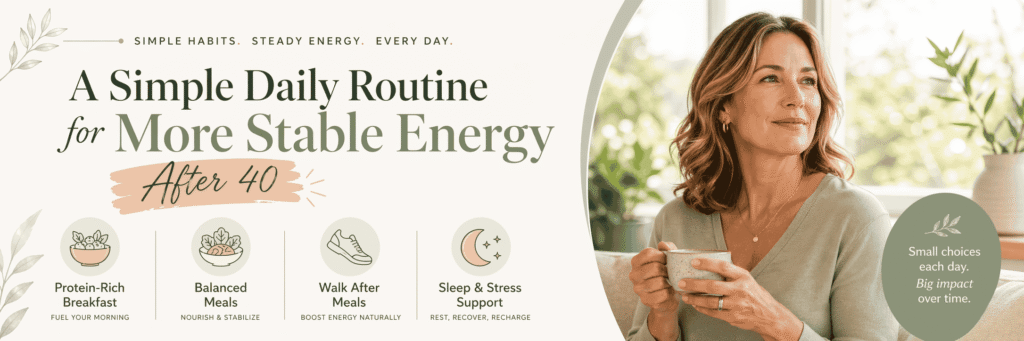
Many women over 40 notice that their energy feels less stable than it used to. You may feel fine in the morning, then crash in the afternoon, deal with stronger cravings, or feel like your body is reacting differently to stress, meals, and sleep.
The good news is that better energy does not always require a complicated plan. Small habits around food, movement, stress, and recovery can make a meaningful difference over time. This routine is designed to help you feel more steady, more focused, and more supported throughout the day.
Quick Takeaways
👉 A simple daily routine after 40 can help reduce energy crashes and reactive cravings.
👉 Better mornings often start with more protein and less fast-carb-only breakfast choices.
👉 Balanced meals and a short walk after eating can support a calmer daily rhythm.
👉 The afternoon crash is often where the day starts to unravel — and where small changes help most.
👉 Evening habits shape next-day energy more than many women realize.
Table of Contents
- Why Things Feel Different After 40
- What This Routine Is — and What It Is Not
- Step 1: Start the Day with Protein
- Step 2: Build More Balanced Meals
- Step 3: Walk After One Meal
- Step 4: Reduce the Afternoon Crash
- Step 5: Protect Your Evening Rhythm
- Why This Kind of Routine Works Better Than Another Strict Plan
- Optional Support: Where Supplements Fit In
- Final Thoughts
Why Things Feel Different After 40
After 40, many women start noticing changes that do not always look dramatic at first, but feel impossible to ignore over time. Energy becomes less predictable. Appetite feels less steady. Cravings can show up faster. Belly fat can become more stubborn. And even when meals seem “healthy,” the body may not respond with the same calm, steady rhythm it once did.
That happens because food is only part of the picture. Hormonal shifts, sleep quality, stress, and changes in muscle mass can all influence how stable or unstable your day feels. This is one reason a blood sugar routine after 40 often works better than trying random tips with no structure. The body usually does better with rhythm than with extremes.
What this means in real life: if your energy feels more reactive now, it is not always because you are doing everything wrong. Often, your body simply needs a more supportive daily pattern.
What This Routine Is — and What It Is Not
This routine is designed to support a few things that matter a lot after 40: more stable energy throughout the day, fewer cravings and less reactive snacking, more balanced meals, and a steadier rhythm around food, movement, and rest. It is not built around perfection, strict rules, or trying to micromanage every bite of food.
That is important, because many women already feel overwhelmed by all the advice around metabolism, hormones, and weight. A useful routine should make the day feel more manageable, not more stressful. It should fit real life.
This routine is:
- realistic
- repeatable
- supportive for more stable energy after 40
- built around simple daily habits
This routine is not:
- a detox
- a strict meal plan
- a fast-fix weight-loss system
- a promise of perfect glucose control in a few days
The goal is simple: create a day that feels steadier, calmer, and easier to repeat tomorrow.
Step 1: Start the Day with Protein
One of the simplest ways to support more stable energy after 40 is to stop starting the day with only fast carbohydrates. Many women do not realize how much the first meal shapes the rest of the day. Coffee and toast, cereal, a pastry, or fruit alone may feel light and easy, but they often create a rise-and-crash pattern that shows up later as cravings, irritability, or low energy.
A breakfast built around protein usually creates a steadier base. That does not mean breakfast has to be elaborate. Eggs, Greek yogurt, cottage cheese, chia pudding, or another protein-rich option can help reduce the kind of morning instability that makes the rest of the day harder.
This is also where many women begin to notice that fewer cravings after 40 are often connected to how the day starts, not just what happens late at night.
Simple rule: do not chase the perfect breakfast. Just make sure the first meal is doing more for you than spiking hunger a few hours later.
Step 2: Build More Balanced Meals
Healthy habits after 40 do not require perfect meals, but they do benefit from better structure. A balanced meal usually includes three things: protein, fiber-rich carbohydrates, and a source of healthy fat. That combination tends to create steadier energy than meals built mostly around refined carbohydrates or meals that are too light to hold you.
This matters because unstable meals often lead to unstable afternoons. A lunch that is too sweet, too low in protein, or too small can make the next few hours feel much harder. That is when the day starts to slide into cravings, snacking, and the familiar feeling of trying to “catch up” with energy.
A more balanced meal does not have to be restrictive or boring. It just needs enough structure to support a calmer response afterward. For most women, that means asking a simple question: does this meal actually help me stay steady for the next few hours?
Step 3: Walk After One Meal
This is one of the easiest habits in any blood sugar routine after 40.
A short walk after lunch or dinner can help support better daily balance without making the routine feel extreme. It does not need to be a workout. The point is not to “burn off” the meal. The point is simply to add light movement after eating, which can help the body respond more smoothly.
For many women, this habit is powerful because it feels practical. It does not require a gym, a full hour, or a perfect schedule. Even when the rest of the day is busy, walking after one meal makes the routine feel more grounded and less dependent on motivation.
Keep it simple: pick one meal first. Make that the meal you walk after most consistently.
Step 4: Reduce the Afternoon Crash
For many women, the hardest part of the day is not the morning — it is the afternoon.
That is when energy drops, cravings get louder, and the urge to snack “just to keep going” becomes harder to ignore. Often, this is where the routine begins to fall apart. That is why this section matters so much.
A better strategy is to expect the afternoon dip and support it before it hits. That might mean making lunch more balanced, avoiding long gaps without food, drinking water, stepping outside for a short walk or reset, or choosing a protein-forward snack instead of automatically reaching for sugar first.
Small changes here can create a big shift in how the whole day feels. This is often the point where women start to notice that fewer cravings after 40 are not just about willpower. They are usually about better setup.
A better afternoon support plan might include:
- a more balanced lunch
- fewer long gaps without food
- more water
- a short reset walk
- a simple protein-forward snack if needed
Step 5: Protect Your Evening Rhythm
Evening habits shape how the next day feels more than most people realize.
Late-night snacking, overstimulation, poor sleep, and irregular dinner patterns can all make the next morning harder. That is why a simple daily routine after 40 should include a calmer evening rhythm, not just better daytime meals.
A more supportive evening might include a balanced dinner, fewer “reward snacks” out of habit, less stimulation close to bedtime, and a more consistent sleep window. The Centers for Disease Control and Prevention also emphasizes that healthy eating, movement, stress management, and sleep all support better day-to-day blood sugar management. You can read more here: CDC: Living with Diabetes.
The point is not to create a perfect nighttime routine. It is to reduce the things that make tomorrow feel harder before it even starts.
Why This Kind of Routine Works Better Than Another Strict Plan
A lot of women are not struggling because they lack discipline. They are struggling because the body responds differently after 40, and rigid plans often ignore that reality.
This kind of routine works better because it is built around rhythm instead of restriction. It lowers the pressure, increases consistency, and gives the body a steadier environment to work with. In most cases, the goal is not perfection. The goal is a day that feels a little more stable, a little less reactive, and easier to repeat tomorrow.
That is what makes this approach more sustainable than another cycle of trying harder, eating less, and then feeling disappointed when the results do not match the effort.
Optional Support: Where Supplements Fit In
This routine is the foundation.
For some women, these habits alone already make a meaningful difference. Others feel like they still need additional support, especially when cravings, energy dips, and daily swings feel harder to manage than they should.
That is where a structured supplement may fit in — not as a replacement for the routine, but as an optional layer alongside it.
If you want to see how that kind of support may fit into this routine, start with the review below.
→ Read the full Sugar Defender review
Final Thoughts
A more supportive day after 40 does not need to be complicated.
Often, the biggest difference comes from repeating a few realistic habits consistently: a better breakfast, more balanced meals, a short walk after eating, fewer long gaps without food, and a calmer evening rhythm. These habits may look small, but together they can help create the kind of steadier day that so many women are missing.
If you want the bigger picture behind cravings, energy shifts, and metabolic changes, explore the full hub below.